Servant Leadership: A Better Way

Betty Brandt • February 21, 2025

About 55 years ago, a man named Robert Greenleaf wrote an essay titled “The Servant as Leader.” He started an entire movement, which we know today as Servant Leadership. In essence, Servant Leadership is a philosophy and set of principles that enrich the lives of an individual, builds better organizations, and ultimately creates a more just and caring world. Servant leadership flips the traditional model and puts the CEO at the bottom in a supporting, serving role. The Servant Leader is a servant first. This represents departure from a leader-first approach, where leaders may prioritize acquiring power or material possessions.


The basic pillars of Servant Leadership include: 


1) LISTENING – You always know when someone is really listening.

2) EMPATHY – Empathy relates to sympathy, but goes deeper into an active sharing of the others' experiences.

3) HEALING – Healing relationships and bringing people together through dialogue and common experiences affects not just the people involved, but also the larger community.

4) AWARENESS – A Servant Leader is aware of their strengths and weaknesses and surrounds themselves with people that will complement those strengths and weaknesses.

5) PERSUASION – Persuasion is based on relationships built over time. A Servant Leader’s words and ideas can be trusted in times when discernment is needed.

6) CONCEPTUALIZATION – Articulating an organization's the lived experience into concise ideas or principles helps those involved move forward together.

7) FORESIGHT – Servant Leaders actively think ahead and consider the potential positive and negative consequences of decisions.

8) STEWARDSHIP – Servant Leaders keep the reputation and integrity of the organization in mind at all times.

9) COMMITMENT TO GROWTH OF PEOPLE – Servant Leaders want staff and volunteers to grow personally as they serve the organization. The goal is to become healthier, wiser, freer, more autonomous and more likely to become servants.

10) BUILDING COMMUNITY – Building trusting relationships is at the heart of building strong communities. Servant Leaders build trusting relationships. 


Listening, empathy, healing, awareness, persuasion, conceptualization, stewardship, foresight, commitment to the growth of people and building community. What do you think? Do you know people who possess these characteristics? In a world where the hunger for power is so evident, we must recognize and support those among us who choose a different path. Servant Leaders need your support! Reach out today and let them know they are valued and not alone in their quest for a just and loving world.


---------------------


For more information about Servant Leadership go to www.greenleaf.org.


Find Greenleaf's book, Servant Leadership

on Amazon

on Bookshop.org


By Rev. Dr. Brenda Freije August 18, 2026
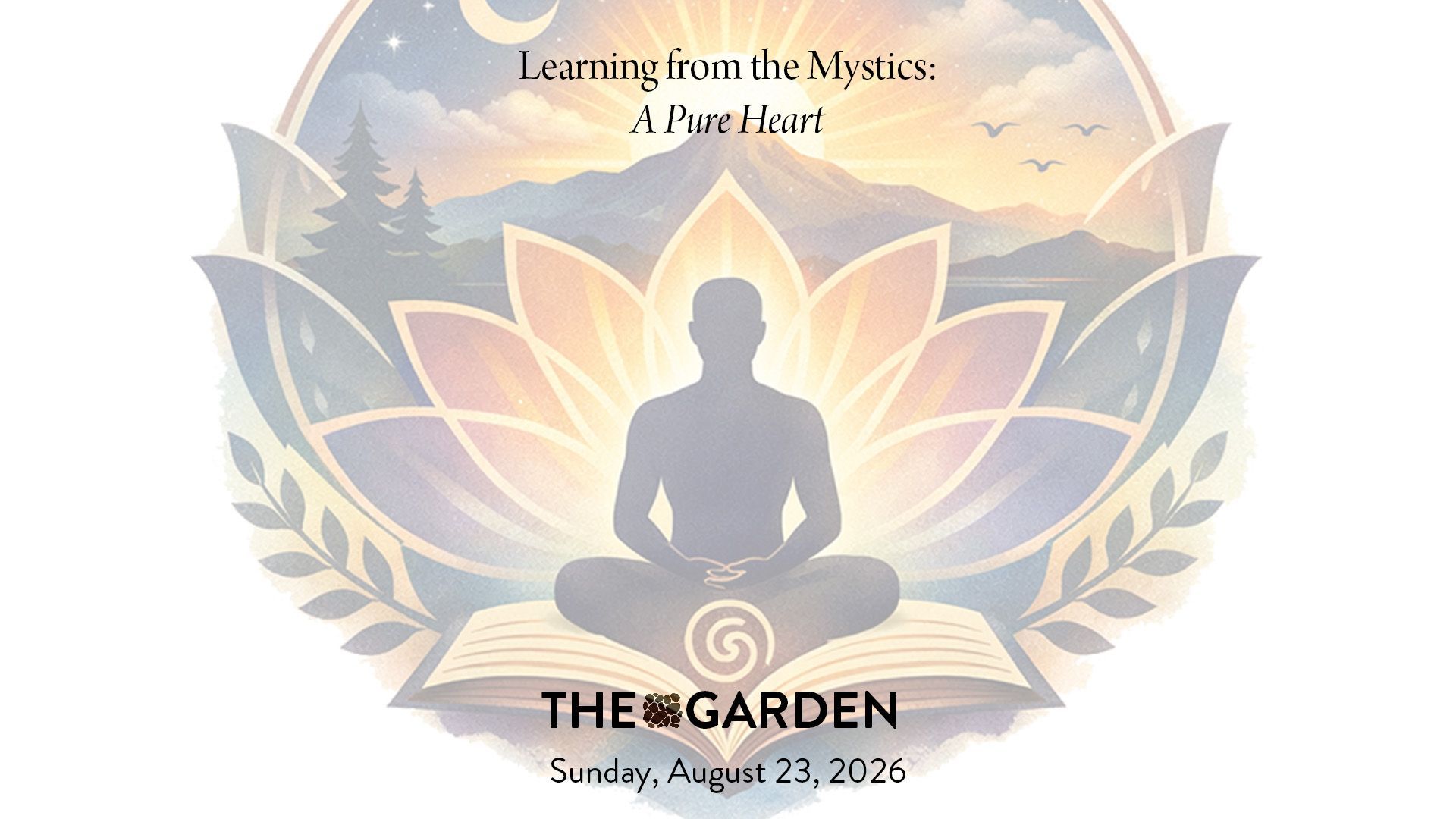
What if Jesus’ words, “Blessed are the pure in heart, for they shall see God,” are not about who gets to see God someday, but an invitation to learn how to see God now? The great Christian mystics believed that the heart is more than the center of our emotions. It is an “organ of spiritual perception,” a way of seeing beneath the surface of things into the deeper reality of God’s presence. Richard Rohr says this is what mysticism is really about. Mystics are not spiritual elites who have strange or extraordinary experiences. They are people who have learned to go beneath the surface and discover the “connected core of reality.” The result is not simply a different experience of God; it is a different way of seeing everything. They begin to see grace in all things and the deep connections between all things—seeing a neighbor instead of a stranger, a human being instead of an enemy, sacred creation instead of commodities, connection instead of separation, and Divine Presence where we previously assumed God was absent. And that gives us perhaps the most important test of genuine mystical spirituality: Are we becoming more loving? The goal of contemplative practice is not extraordinary spiritual experiences. Its fruit is a growing capacity for compassion, generosity, freedom, and love—a different way of being in the world. Let's explore what Jesus might mean by a “pure heart,” what keeps us from seeing clearly, how learning from the mystics and their practices can help us awaken to a God who may be much closer than we realize, and how all of this might enable us to act in the world with greater peace, hope, and clarity.
By Joy Dyer, MSW, LCSW August 10, 2026
The relationship we have with our mothers is one of the most meaningful in our lives. Sometimes sweet, sometimes difficult…or worse…but always full of complexity. And researchers have determined that this most significant of relationships actually begins in the womb. It’s the template where we first learn about love, whether we were fortunate to have loving mothers, or mothers who sadly were unable to love us as we needed and deserved. This primal, intense relationship continues throughout our lives, influencing and shaping who we become and how we relate to others as we journey through on our own paths. Is it any wonder then that the death of our mothers is one of the most impactful losses that we will experience? And yet, even after her death, it’s possible to have a continuing conversation and relationship with her…with her gifts and her flaws…that allows for connection and the possibility of repair and forgiveness. This Sunday, please join us as we explore the joys, sorrows, and possibilities of the eternal bond between mother and child. Joy Dyer, MSW, LCSW, brings 37 years of clinical social work experience, including work in end-of-life care and advanced bereavement training. She specializes in grief in all its forms. Joy returns to The Garden on Thursday, September 3 for Debunking the Myths of Grief.
By Rev. Dr. Carolyn Scanlan-Holmes August 4, 2026
On the Importance of Play
By Rev. Dr. Carolyn Scanlan-Holmes July 29, 2026
Sometimes, joy is the last thing on the list. Bills pile up, plans fall through, the news doesn't help — and "just be joyful" can start to feel like one more thing at which we're failing. This Sunday, we're taking a closer look at joy. We're not interested in the fake-it-till-you-make-it or the just-look-on-the-bright-side kind, but something sturdier. Nehemiah 8:10 puts it simply: the joy of the Lord is our strength. It is not a mood, and it is not a performance, but a strength we can lean on. It isn't a denial of pain, sorrow, or other distress, but may offer a path through. Dr. Kerry Burnight makes a related case in her recent book Joyspan — that a good life has less to do with how long we live than with how much joy we let ourselves experience along the way. Join us Sunday as we explore Joy, and what can happen when we open ourselves to it no matter our circumstances.
By Rev. Dr. Carolyn Scanlan-Holmes July 21, 2026
How does a community fight loneliness? We'll explore our grant-funded work, what's working, and how it echoes the community-building ministry.
By Rev. Dr. Carolyn Scanlan-Holmes July 13, 2026
As a sacred and revered text, the Bible exerts tremendous influence on our lives. Notwithstanding our constitutional separation of church and state, its impact reverberates through our politics, morality, and spirituality. Yet, while widely respected and treasured, the Bible’s influence—or rather, its interpretation by those with power and resources and the desire to make other people live by their beliefs—has been leveraged to justify slavery, vilify LGBTQ+ people, elevate men over women, and divide rather than unite. This week, we will slow down to look past those historical misuses. Instead, we’ll dig directly into the timeless truths and teachings within the Bible that offer guidance for our faith and inspiration for our daily choices.
By Lea Ann Koekenberg July 11, 2026
God Provides, God Protects, God Leads
July 6, 2026
Explore the U.S. Constitution's relevance today. Join us for insights on its principles & impact on society.
June 29, 2026
We often hear the phrase, "Make sure you read the fine print," as we navigate the complexities of daily life. Whether it's the Constitution, the Bible, or even the manual for our computers, there's a wealth of fine print that tends to be skimmed over, misinterpreted, or entirely overlooked. Yet these details often hold the key to understanding the bigger picture and guiding us through life's challenges. This week, we're excited to launch a three-week series titled "The Fine Print." Over the next few Sundays, we'll take a closer look at some of the most important documents that shape our lives and values. Week 1: We'll explore The Declaration of Independence—a powerful statement of freedom and the rights of individuals that still resonates today. Week 2: Our focus shifts to The Constitution, examining its vital principles and how they continue to influence our society. Week 3: We'll conclude with a deep dive into The Bible, uncovering the profound truths and teachings that guide our faith and actions. Each message will stand on its own, so if you happen to miss one, rest assured you can still enjoy and engage with the others — though we'd love to have you for the whole series. Join us this Sunday for The Fine Print—a journey that promises to deepen our understanding and appreciation of these foundational texts. Together, we'll discover how the details within these documents can illuminate our paths and enrich our lives. You won't want to miss it!
June 23, 2026
We have often heard the words, "It is more blessed to give than to receive." The phrase is so well-known that many people don't even realize it is found in the Bible (Acts 20:35). So, is it just a cliché, or does God truly do something in the heart of a giving person—something that blesses both them and the world in which they live? Research shows that this is no mere platitude. Our brains respond to generosity by triggering a significant positive feedback loop when we practice, receive, or even simply witness giving in action. In a 2008 study, researchers found that people who spent money on others reported a notably higher uptick in happiness than those who spent it on themselves. Interestingly, this difference had nothing to do with how much they spent, but rather the direction of their spending. Giving really does benefit everyone—the giver, the receiver, and the witness—and the effect ripples outward. And it’s not just about monetary gifts, but also gifts of kindness and service. What we do, and how we give, truly matters. Join us Sunday as we explore how God turns giving into the blessing of receiving.