The Rewards of Service and Stewardship

Mike Ransom • November 4, 2025

An Interview with Gardener Mike Ransom

Mike, what motivates you to pledge and serve at The Garden? 


It has been said many times that the greatest benefit of serving others is the good feelings you, as “the server,” receive from the effort. That has certainly been true of my twenty-five-plus years as a Gardener. Whether it was serving in a leadership role, assisting with Soup’s On, donating laundry baskets to Fletcher Place, or now being a member of Faith in Action, the richness of the rewards just keeps on coming. 


Can you share a specific way your service has been meaningful? 


Chairing the Bread for the World Offering of Letters campaign at The Garden over the last few years has brought me great satisfaction. Being part of something larger—thousands of letters going to our congressional representatives, imploring them to address the challenge of hunger and food insecurity locally and globally—means I’m making a small difference. Knowing that our congregation fully embraces the opportunity to speak with one voice about hunger is humbling, but it is also a meaningful way to remind our legislators of Jesus’ words: that feeding the needy is a direct act of service to Him. 


What challenges have you seen recently in this work? 


This year has been a significant challenge, with detrimental actions taken by the Federal Government against efforts to serve the hungry. Still, we cannot rest until our collective voice breaks through. 


Why does this issue feel so personal to you? 


It is hard for me to talk about this issue without becoming emotional. Having served at summer feeding sites in the past, I remember the smiles on children’s faces, knowing it might have been their only meal of the day. 


How has this journey shaped you, and what role does The Garden play in it? 


In the end, I have personally grown from these experiences—feeling both hope and joy—and I am thankful that The Garden community recognizes the need and continues to be a place of spiritual and physical stewardship, committed to changing things for the better. 

By Rev. Dr, Carolyn Scanlan-Holmes • September 29, 2026
Although we define our world with borders, walls, and ideologies, World Communion Sunday brings us a simple reality: we belong to each other. This Sunday, we gather around a table that expands across the globe, a table of radical hospitality where all are fed, all are valued, and all are loved. Together, we commit to the collective work of peace, justice, and healing for our planet. Join us as we break bread and build bridges.
By Rev. Dr. Carolyn Scanlan-Holmes • September 22, 2026
Be honest: When you pray, does it feel like a genuine conversation—or just another item on your to-do list? Sometimes, the most familiar things are the hardest to truly see. This Sunday, we continue week two of our series, The Art of Living, by stripping away the routine and taking a radical new look at the most famous prayer in history. Diving into the Gospel of Matthew, we're looking past the familiar recitations of the Lord's Prayer to discover what it actually takes to build a thriving spiritual life. Whether your prayer life feels vibrant, completely stuck, or non-existent right now, Jesus' words offer the reset you need. This week, we're digging into the setup, motive, and heart of prayer—moving past empty repetitions and performance checklists to find a space where true connection and forgiveness can transform our daily lives. Mastering the art of living doesn't start with striving; it starts with humility and silence in the presence of God. Join us this weekend as we discover how a simple shift in our prayer life can change everything. See you Sunday!
By Rev. Dr. Carolyn Scanlan-Holmes • September 14, 2026
A new two-week series exploring how faith connects to daily rhythms and habits — with a visual artist and writer bringing "The Art of Living" to life.
By Michael Ransom • September 13, 2026
You can make a difference with the power of the pen
By Rev. Richard Brendan • September 7, 2026
St. Francis's embrace of the leper reveals a truth about love: it grows not by avoiding what frightens us, but by moving toward it.
By Rev. Dr. Carolyn Scanlan-Holmes • September 1, 2026
Remembering 9/11
By Rev. Dr. Carolyn Scanlan-Holmes • August 25, 2026
Life comes with no map. We try to make our own and we set out, sometimes with excitement, sometimes with fear or grief, or just because standing still isn't an option. Sometimes we go not entirely sure where we're headed or what we'll find when we get there. In one of the most quietly beautiful stories in the Gospel of Luke, two travelers, heavy with loss and confusion, walk a road from Jerusalem. They meet a stranger, who falls in step beside them. They don't know who he is. They don't know what's coming next. But they keep walking. Somewhere in the walking, something shifts. The Road to Emmaus isn't really a story about a destination. It's a story about what happens on the way there: the conversations, the companions, the moments of unexpected recognition that change everything. Join us Sunday as we explore what it means to be on a journey full of unknowns. Do we fear that which we cannot know, or can we embrace the uncertainty as part of the adventure?
By Rev. Dr. Brenda Freije • August 18, 2026
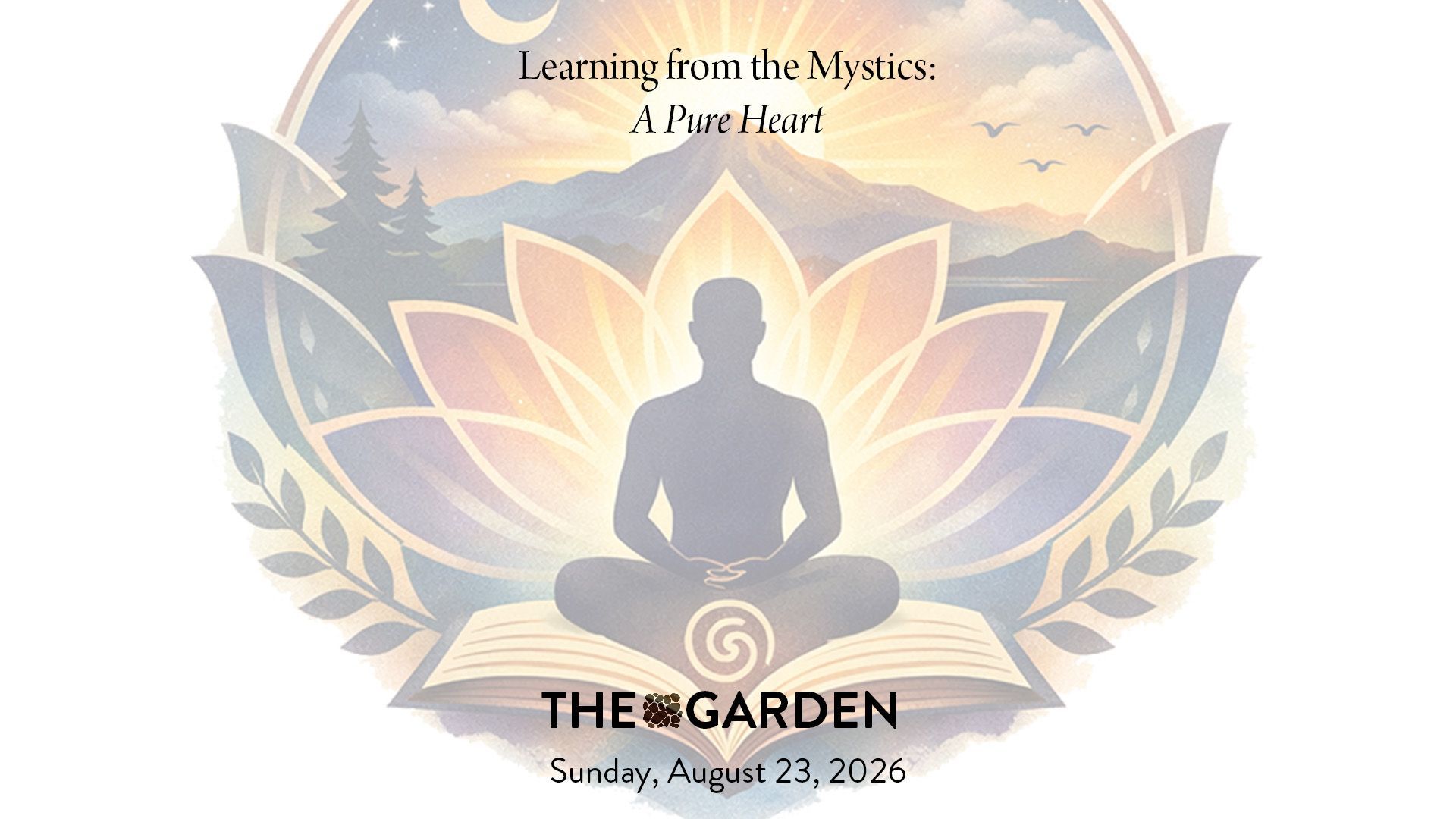
What if Jesus’ words, “Blessed are the pure in heart, for they shall see God,” are not about who gets to see God someday, but an invitation to learn how to see God now? The great Christian mystics believed that the heart is more than the center of our emotions. It is an “organ of spiritual perception,” a way of seeing beneath the surface of things into the deeper reality of God’s presence. Richard Rohr says this is what mysticism is really about. Mystics are not spiritual elites who have strange or extraordinary experiences. They are people who have learned to go beneath the surface and discover the “connected core of reality.” The result is not simply a different experience of God; it is a different way of seeing everything. They begin to see grace in all things and the deep connections between all things—seeing a neighbor instead of a stranger, a human being instead of an enemy, sacred creation instead of commodities, connection instead of separation, and Divine Presence where we previously assumed God was absent. And that gives us perhaps the most important test of genuine mystical spirituality: Are we becoming more loving? The goal of contemplative practice is not extraordinary spiritual experiences. Its fruit is a growing capacity for compassion, generosity, freedom, and love—a different way of being in the world. Let's explore what Jesus might mean by a “pure heart,” what keeps us from seeing clearly, how learning from the mystics and their practices can help us awaken to a God who may be much closer than we realize, and how all of this might enable us to act in the world with greater peace, hope, and clarity.
By Joy Dyer, MSW, LCSW • August 10, 2026
The relationship we have with our mothers is one of the most meaningful in our lives. Sometimes sweet, sometimes difficult…or worse…but always full of complexity. And researchers have determined that this most significant of relationships actually begins in the womb. It’s the template where we first learn about love, whether we were fortunate to have loving mothers, or mothers who sadly were unable to love us as we needed and deserved. This primal, intense relationship continues throughout our lives, influencing and shaping who we become and how we relate to others as we journey through on our own paths. Is it any wonder then that the death of our mothers is one of the most impactful losses that we will experience? And yet, even after her death, it’s possible to have a continuing conversation and relationship with her…with her gifts and her flaws…that allows for connection and the possibility of repair and forgiveness. This Sunday, please join us as we explore the joys, sorrows, and possibilities of the eternal bond between mother and child. Joy Dyer, MSW, LCSW, brings 37 years of clinical social work experience, including work in end-of-life care and advanced bereavement training. She specializes in grief in all its forms. Joy returns to The Garden on Thursday, September 3 for Debunking the Myths of Grief.
By Rev. Dr. Carolyn Scanlan-Holmes • August 4, 2026
On the Importance of Play