Never Again

February 3, 2026

Neighbors, Not Enemies

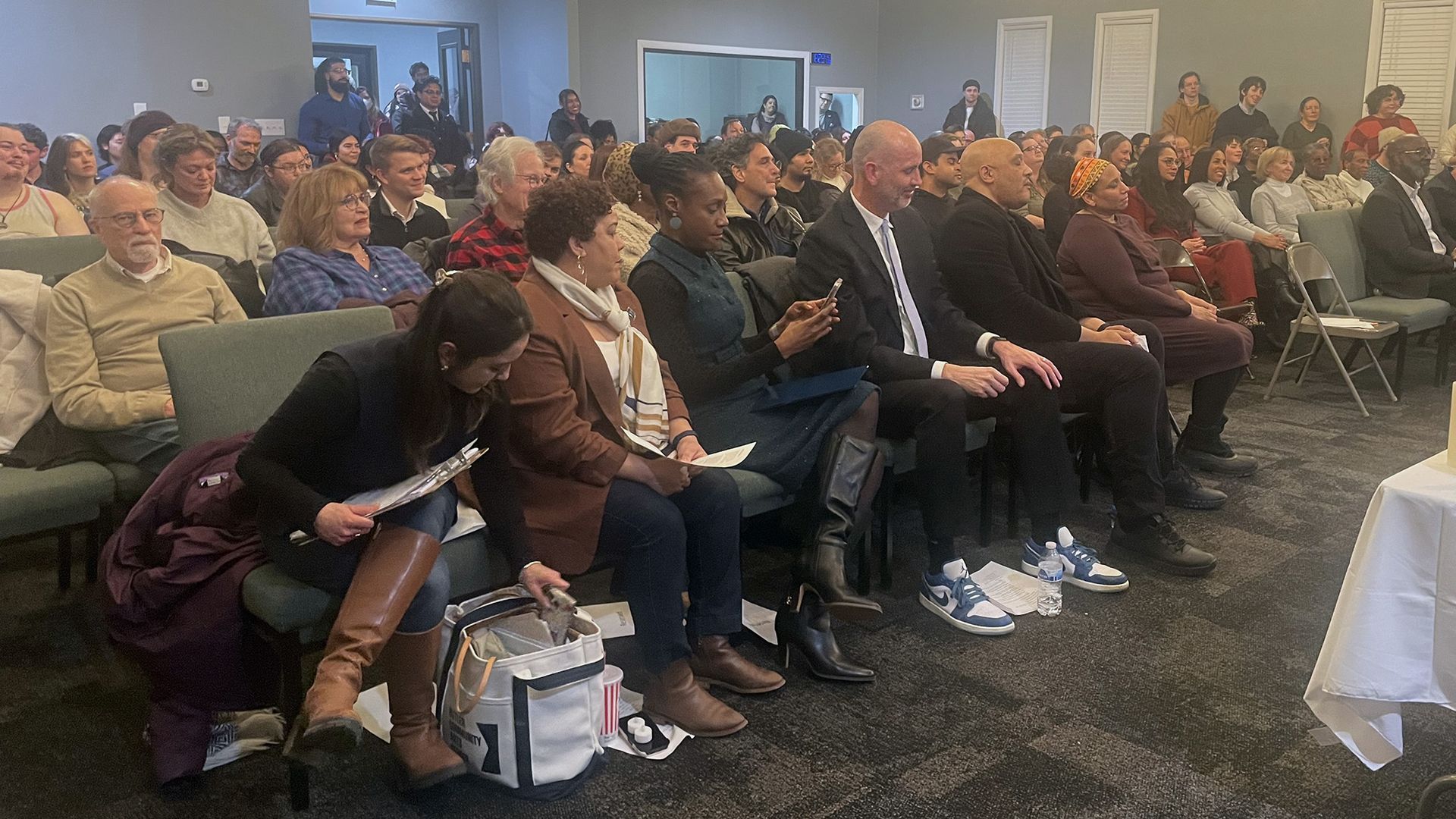
It was standing room only at the Liberty Missionary Baptist Church on the evening of Friday, January 30, 2026. The Marion County Young Democrats were hosting a vigil to remember those who have died at the hands of ICE agents. The leadership of that group had managed to get commitments from local Democratic leaders and those leaders showed up to speak. United States Representative Andre Carson, Indiana Senator Fady Qaddoura, Marion County Prosecutor Ryan Mears, and several City and County Councilors.


All the speakers had something important to say, but Malkah Bird, a member of Jewish Voices for Peace, brought the audience to their feet. Malkah’s message was very personal. As a Jew, she knows what happens when a state decides some people are disposable. She told the attentive audience, “After the Holocaust, our people made a vow – etched into our bones and carried across generations: Never Again! Hear us clearly tonight, and let there be no ambiguity: Never Again is Now! Never Again means no more scapegoating – no turning neighbors into enemies, no blaming the vulnerable for the violence of the powerful. Never Again means no more checking papers – not at bus stops, not on street corners, not in classrooms, not in hospitals. Never Again means no more concentration camps – not at the border, not in Marion County, not hidden behind euphemisms like ‘detention’ or ‘processing.’ Never Again means no child torn from their parents by the state. Never Again means no one disappeared into cages without due process, without medical care, without dignity.”


The cry “Never Again” became a pledge on that Friday evening to work together across religious, racial, ethnic and generational lines to make big changes in our mutual pursuit of justice for everyone. You should have been there!


Moments like this remind us that “Never Again” is not just a slogan, but a responsibility. If we mean it, we have to act. But what can we do? We can show up at school board and council meetings where immigrant families are discussed without their voices present. We can support local groups who are providing legal aid, translation help, and emergency assistance to undocumented neighbors. We can challenge dehumanizing language when we hear it in our workplaces, our social circles, and in our own families. We can accompany people to court dates, donate to bond funds, and contact our lawmakers to advocate for policies protecting due process and keeping families together. None of us can do everything, but all of us can do something. And when we do, “Never Again” becomes more than a vow. It becomes our service, our ministry, our action.


If you’re wondering where to begin, Indianapolis has these organizations doing courageous, hands‑on work daily:


The Immigrant Welcome Center

Exodus Refugee Immigration

Coalition for Our Immigrant Neighbors (COIN) 

The Immigrant Legal Services Fund 


These organizations welcome volunteers, donations, and community partners. Showing up, whether by supporting legal aid, mentoring a newly-arrived family, or attending local advocacy events, is one way we may turn “Never Again” from a vow into a shared practice of human dignity.
By Matthew Vire March 17, 2026
"Be you" is common advice. But what does it mean? The exhortation to "be you" is an invitation to relax into yourself and let go of worries that you don't measure up to someone else's idea of who you are or should be. "Be you" means be honest––to yourself first and then with the world––about your thoughts, feelings, insecurities, passions, interests, and inclinations. It means you're more than worthy. It means you are enough. It means you're worth knowing, seeing, and loving. Our resistance to be ourselves comes from fear, judgement, and insecurity. Fear tells us "hide." Judgment says, "you're not good enough, so you better pretend." Insecurity warns, "people won't like you if they really see you." But it can be easy to Be You. You don't have to do anything; you can just be. The only barrier is self-acceptance. Love can break through that. May this week give you space to breathe, to soften, and to trust that who you are is already held in love.
By Rev. Dr. Carolyn Scanlan-Holmes March 16, 2026
This Sunday, we continue our Lenten journey with the theme of belonging. The National Institutes of Health recognizes belonging as a fundamental human need that shapes our mental, physical, and social well-being. One of the insights from our Greenhouse Challenge was the recognition that many people in the U.S. are experiencing loneliness. In response, The Garden has been exploring what it means to belong—not just socially, but spiritually and communally. During worship, we’ll check in with Scott Semester to hear how our grant initiative may help us create spaces of sanctuary—places where people feel seen, safe, and truly at home. Our Scripture this week, Ecclesiastes 4:12, reminds us that “a cord of three strands is not quickly broken.” Belonging is not just about individual strength—it’s about the resilience we find in connection. When we walk together, support one another, and share our lives, we become stronger than we ever could be alone. May we continue to weave lives of compassion, curiosity, and courage—threads that bind us to one another and to the sacred truth that we belong.
By Matthew Vire March 11, 2026
Paths to Belonging
March 10, 2026
Hogeye Navvy Takes Over The Garden
By Betty Brandt March 7, 2026
Discover the spiritual practice of labyrinth walking during Lent and join upcoming community walks that invite reflection, prayer, and renewed presence.
By Betty Brandt March 7, 2026
A rare overlap of Ramadan and Lent invites Muslims and Christians into shared prayer, hospitality, and community during this once‑in‑a‑generation season.
By Matthew Vire March 5, 2026
Is the "ripple effect" real? Explore how faith, Diana Ross, and peer-reviewed research prove that your smallest acts of kindness can change the world.
By Rev. Dr. Carolyn Scanlan-Holmes March 4, 2026
Living Waters
By Rev. Dr. Carolyn Scanlan-Holmes February 23, 2026
Join us this Sunday as we embark on a transformative journey during Lent—our season of reflection, repentance, and renewal. This year, our theme is "Be Here. Be You. Belong." Our world is filled with distractions pulling us in every direction, so we often miss the profound significance of simply being present. This week, we will explore what it means to Be Here Now, to pause and embrace the moment as we deepen our connection with God. Together, we will delve into the wisdom of Brother Lawrence, whose insights on practicing the presence of God turned everyday tasks into sacred experiences. Let’s rediscover the holiness in the mundane and learn how to cultivate a spirit of mindfulness in our lives. Don’t miss this opportunity to reflect, grow, and engage more deeply with your faith. Join us as we journey together towards Easter, finding our place in God’s presence. See you Sunday!
By Matthew Vire February 23, 2026
As we continue our journey through Paths to Belonging, David Wilcox’s "The Beautiful" offers a tender companion for times we feel overwhelmed and weary. David opens the song in a museum, an unexpected refuge where beauty offers a kind of shelter from a world that feels tragic and too heavy to hold. He names a truth many of us carry: that in the “ocean deep,” when the waves of sorrow or fear rise, our most dearly-held hopes and even our faith can feel thin. And he reminds us that beauty–quiet, ordinary, human beauty–can help steady us. A smile from a stranger, a moment of kindness, a glimpse of light and shadow can warm the heart enough to keep going. We invite you to listen and spend a few moments reflecting on the feelings, images, and memories the song evokes in you. Remember you are not alone and that belonging reveals itself in simple, grace-filled moments of human connection and Divine presence.